Inclusive Playground Design Accessible Play Systems for All Abilities
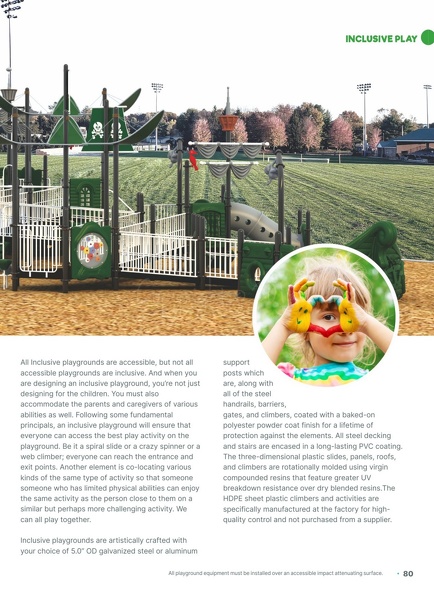

Inclusive playgrounds are designed to go beyond basic accessibility by creating environments where children of all abilities can play together. True inclusive design considers not only access, but participation, engagement, and shared experiences.
Key Principles of Inclusive Play
Equal Access to Play Activities
All children should be able to reach and engage with core play elements, not just observe.
Multiple Entry and Exit Points
Ramps, transfer stations, and ground-level access ensure all users can navigate the structure.
Varied Levels of Challenge
Activities should range in difficulty to accommodate different physical and cognitive abilities.
Co-Located Play Experiences
Similar activities are positioned together so children of varying abilities can interact side by side.
Sensory Engagement
Incorporates tactile, visual, and interactive elements for a broader range of play experiences.
Material & Construction Highlights
Steel posts, handrails, and barriers for structural durability
Powder-coated finishes for long-term weather resistance
Rotationally molded plastic slides and panels for consistency and safety
UV-resistant materials to maintain color and integrity over time
Factory-controlled manufacturing for quality assurance
Benefits of Inclusive Playground Design
Encourages social integration and shared play experiences
Supports physical, cognitive, and emotional development
Creates welcoming community spaces for all families
Meets modern expectations for accessibility and usability
Reduces barriers to participation in public play environments
- File
- 81.jpg
- Albums