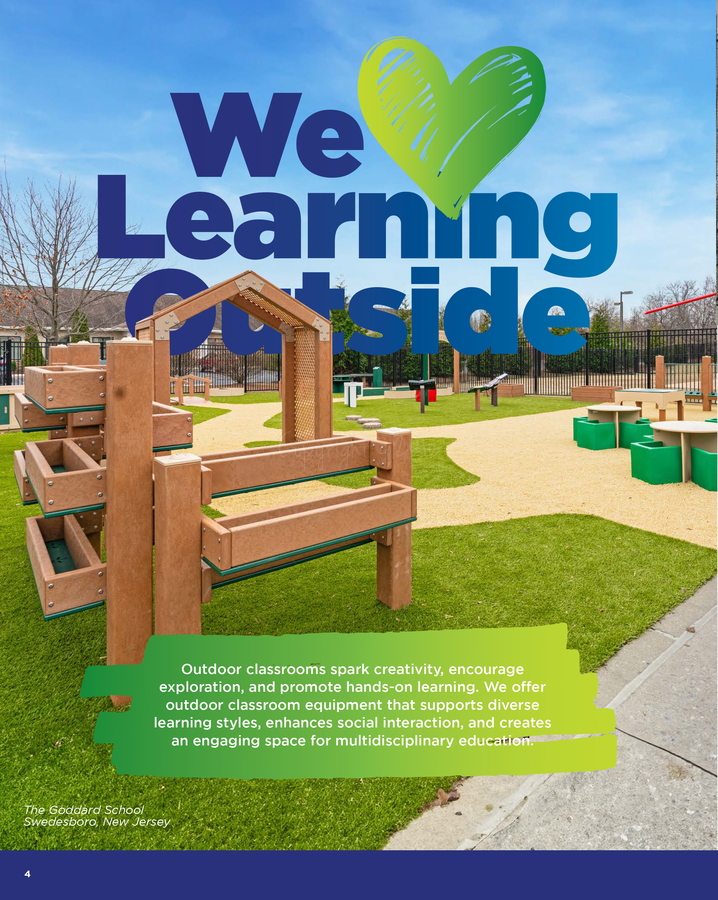

Outdoor Learning Classrooms
Outdoor classrooms create engaging educational environments that encourage creativity, exploration, collaboration, and hands-on learning. By extending learning beyond the traditional indoor classroom, these spaces help children connect physical activity, social interaction, and real-world discovery within a natural outdoor setting. Modern outdoor learning environments support diverse learning styles by combining movement, sensory interaction, communication, and imaginative play into a unified educational experience. Students are encouraged to actively participate rather than passively observe, creating stronger engagement and improved retention across multiple developmental areas.
Outdoor educational spaces can support multidisciplinary instruction including science, language development, mathematics, art, dramatic play, nature studies, sensory exploration, and collaborative problem solving. Flexible layouts allow educators to adapt activities for both structured lessons and open-ended exploration. Hands-on learning environments encourage students to explore textures, movement, balance, sound, communication, and environmental interaction. This type of experiential learning promotes curiosity while helping children develop cognitive, physical, emotional, and social skills simultaneously.
Outdoor classrooms also create valuable opportunities for social interaction and cooperative learning. Shared activity spaces encourage communication, teamwork, role play, and peer engagement in ways that traditional classroom environments may not always support. Educational outdoor environments are commonly used by schools, childcare centers, early learning campuses, parks, churches, and community developments seeking to provide enriched learning opportunities through nature-based and activity-driven education.
Commercial outdoor classroom equipment can include collaborative seating, sensory stations, nature play features, outdoor art spaces, STEM-focused activities, music elements, dramatic play structures, gathering areas, and flexible educational components designed for long-term durability and daily use. Well-designed outdoor learning spaces help transform traditional playgrounds into dynamic educational environments where children can learn through movement, exploration, observation, and interaction. These environments support active engagement while creating inviting spaces that encourage lifelong curiosity and learning.
- File
- 2025-09 GFP 4.jpg
- Albums